Find a Battle!

Monday, March 23, 2015

Facial Hair


Civil War:
Facial Hair
 
Facial hair was one of the most common forms of fashion during the Civil War era. Not only were the wavy beards and handlebar mustaches the most common trends, they were designed (especially for generals and those of higher power) to daunt the enemy by flaunting the ferocious whiskers of immense power… and the enemy ran in terror primarily because most of those beards were downright ugly!

Like many materials made of metal, razor blades were scarce during wartime. Not every soldier would necessarily have a blade of his own, and even civilians had trouble finding them for purchase. Yet the Union Army's official guidelines were quite particular 100. Where conveniences for bathing are to be had, the men should bathe once or twice a week. The feet to be washed at least twice a week. The hair kept short, and the beard neatly trimmed. 1662.The hair to be short; the beard to be worn at the pleasure of the individual; but, when worn, to be kept short and neatly trimmed.

However, this rule wasn't necessarily enforced. You may be able to discern from the fact that more than 1,662 rules existed that not all of them could possibly be enforced (the Revised United States Army Regulations of 1861 amounted to more than 500 pages of rules). As we shall see, some of the very highest ranking individuals in the Union Army ignored this rule.

            Some of these haggard haircuts include: the handlebar, a trimmed beard, the two horned beard, the burnside (side burns), the goatee, the handlebar with a goatee, the texas ranger, the almost Hitler with a goatee (Aldelbert Ames), and etc. Some of these famous leaders include Ambrose Burnside, George Crook, and Alpheus Williams (below.)
  
Also, from 1861 to 1913, the common trends among the presidents were included with facial hair. Starting from the king of trends, Abraham Lincoln, the destructor of the Confederacy, won not only the war, but also the 19th century beard contest.

This reign of bushy magnificence ended after nearly fifty years by the infamous William Taft. Now, we all know that Taft went through a stressful time in his life but that did not phase his mustache. Though, it did sadly demotivate the latter presidents of having facial hair


http://www.businessinsider.com/best-civil-war-beards-and-mustaches-2013-11

http://h2g2.com/approved_entry/A39115334

Monday, March 2, 2015

Battle of the Second Bull Run

Battle of the Second Bull Run


Battle Background:

After compelling Union Gen. George B. McClellan to withdraw from the outskirts of Richmond to Harrison’s Landing on the lower James River, Gen. Robert E. Lee turned his attention to the threat posed by the newly formed Union Army of Virginia, under the command of Gen. John Pope.  The Lincoln administration had chosen Pope to lead the reorganized forces in northern Virginia with the dual task of shielding Washington and operating northwest of Richmond to take pressure off McClellan’s army.  To counter Pope’s movement into central Virginia, Lee sent Gen. T. J. “Stonewall” Jackson to Gordonsville on July 13.  Jackson’s force crossed the Rapidan River and clashed with the vanguard of Pope’s army at Cedar Mountain, south of Culpeper, on August 9.  Jackson’s narrow tactical victory proved sufficient to instill caution in the Union high command. 


Military Leadership:

For the Union the main General was John Pope. The other General was George McClellan He was a United States Army officer, John Pope was appointed on June 14, 1861 to brigadier general of volunteers by President Abraham Lincoln. In March of 1862 Pope was ordered to command  the Army of Virginia by President Lincoln.  In late August 1862 Pope met with Confederate General Robert E. Lee, General Thomas “Stonewall” Jackson, and General James Longstreet. The main General that led the Confederate’s initial attack was Robert E. Lee.

   
Plans and Objectives:


     General John Pope ascertained Robert E. Lee’s plan to trap him against the Rappahannock and withdraw to the north bank astride the railroad. Lee, learning that two corps from the Army of the Potomac would join Pope within days, to act quickly and boldly.

Execution:

    On July 13 General Lee sent Jackson with forces eventually totaling 24,000 men to watch Pope. After an initial sparring action at Cedar Mountain on August 9, Jackson and Pope stood watching each other for nearly a week. Pope’s Army of Virginia was ordered to divert pressure from McClellan on the peninsula of Virginia. But General Jackson had left the valley, and Federal forces were scattered. On August 3 Halleck ordered General George McClellan to withdraw by water from the peninsula to Aquia Creek on the Potomac and to enact in a speedy junction at Fredericksburg with Pope. Meanwhile, Pope was to post the Army of Virginia along the Orange and Alexandria Railroads to the west of Fredericksburg.

Results:

    This battle was a great victory for the Confederates. There was about 22,177 casualties. For the Union there was 1,716 deaths, 8,215 wounded, 3893 missing or captured for a total 13,824. For the Confederates there was 1,305 killed, 7,048 wounded for a total of 8,353. At the time, the staggering Union loss at Second Manassas was blamed on Pope, McClellan, McDowell, and Porter. All of their reputations were stained by what had happened, but Porter and McDowell were, for all intents and purposes, ruined. McDowell was exonerated of any wrong-doing but would never fully escape the opinion that he was incompetent and disloyal. Pope squarely blamed the defeat on Porter for disobeying the order to attack on August 29. Porter was court-martialed and discharged from the army, spending much of the rest of his life trying to restore his reputation.

Monday, January 19, 2015

General Charles Lee

General Charles Lee
        Charles Lee was born in Britain. He was somewhat eccentric, slovenly in appearance, coarse in language, and perhaps most of all, he wanted to be paid. By joining the rebellion, he forfeited all his properties in England, and wanted to be compensated. George Washington, on the other hand, was sober, steady, calm, and best of all, would work without pay, asking only that the Continental Congress should cover his expenses.
        Later in the year of 1776, he was captured by British cavalry under Banastre Tarleton and held as a prisoner until exchanged in 1778. During the decisive Battle of Monmouth later that year, Lee led an assault on the British which miscarried.Charles Lee served as a General of the Continental Army during the American War of Independence.During 1776, forces under his command repulsed a British attempt to capture Charleston, which boosted his standing with the army and Congress. When war appeared inevitable he resigned his Royal commission and volunteered his services to the colonies. He expected to be named Commander-in-Chief of the Continental Army, being the most experienced candidate. 

Monday, January 12, 2015

Battle Brief: Battle of Lexington and Concord


Battle Background:

In Lexington (near Massachusetts,) the British hoped to capture Sam Adams and John Hancock. In Concord, British troops were to seize control of the colonial’s gunpowder.

Military leadership:

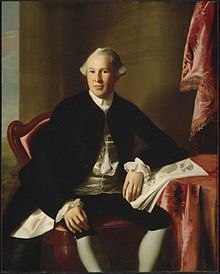
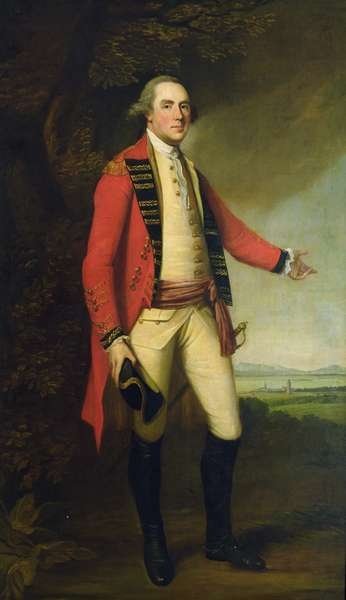
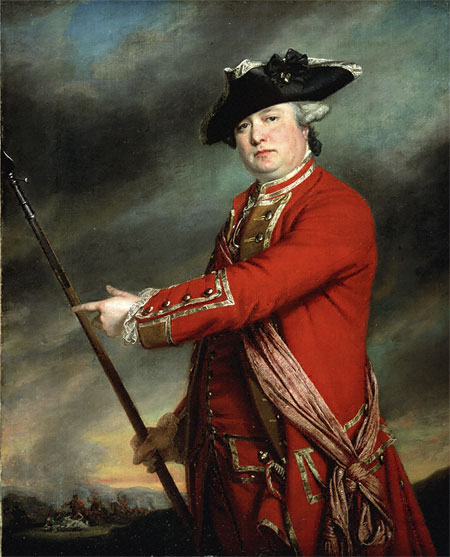
The militia leaders of the British military during this battle are General Thomas Gage and Lieutenant Colonel Francis Smith. The militia leader of the continental army during this battle is Major General Joseph Warren.
220px-JosephWarrenByCopley.jpeg
Major General Joseph Warren
frl316240.jpg
General Thomas Gage
Francis_Smith.jpeg
Lieutenant Colonel Francis Smith


Plans and Objectives:


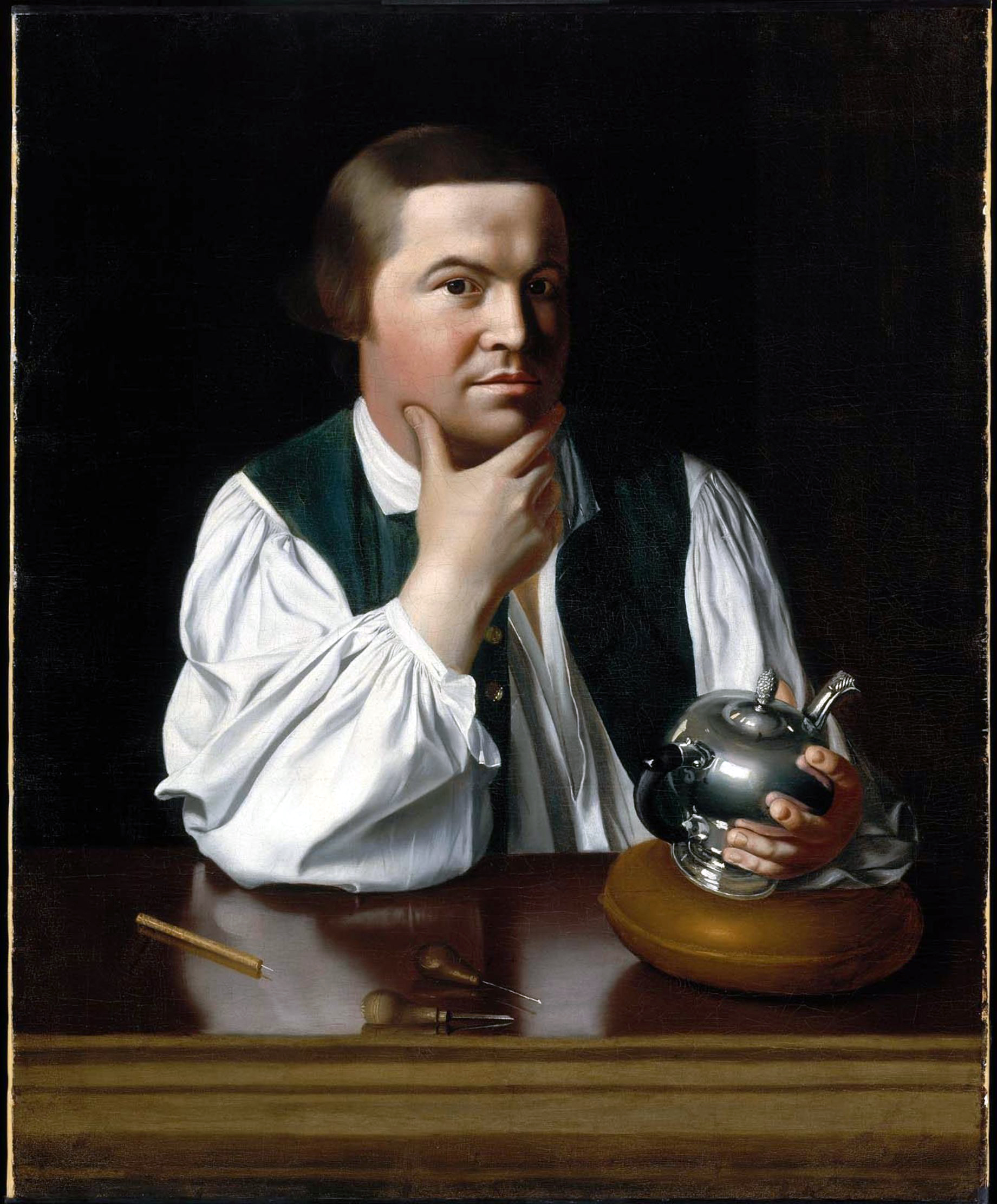
General Gage of the British army had a secret plan that sparked the battles of Lexington and Concord. In the early morning of April 19, 1775, General Gage sent out waves of British troops for ambush in the 13 colonies. On April 7, 1775, with the threat of British troop movement, Joseph Warren sent Paul Revere to warn the Massachusetts Provincial Congress in Concord. When warning was received, Concord residents began moving the military supplies away from the town. The colonials were warned in time and were prepared for war. When the British troops began to lose their raid on Lexington, they retreated towards Boston where new waves of warned Colonial militia were able to obstruct them. In way to Concord, colonials marched with new regiments who had joined them. From there, the British retreated towards Boston.


Midnight Rider Paul Revere

Execution:


Results:

The British’ plans failed and were forced to retreat.


Bibliography:

http://en.wikipedia.org/wiki/Joseph_Warren

http://en.wikipedia.org/wiki/Battles_of_Lexington_and_Concord

http://www.history.com/topics/american-revolution/battles-of-lexington-and-concord

www.ushistory.org/us/11c.asp